
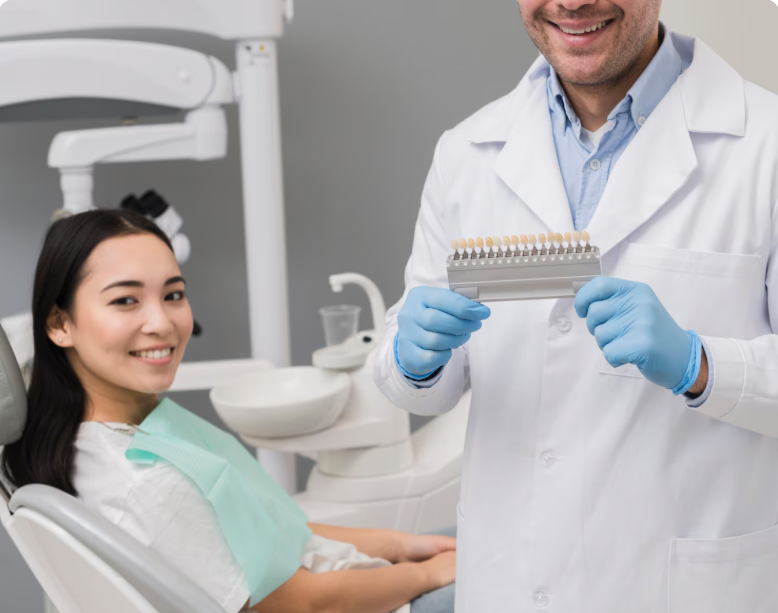
Porcelain veneers can dramatically transform a smile while maintaining a natural and balanced appearance, making them one of the most sought-after cosmetic dental procedures. Many people don’t realize that creating veneers involves much more than simply selecting a shade of white. Dentists offering dental veneers Glasgow carefully evaluate your facial features, proportions, and smile dynamics as part of this artistic and highly personalized process, ensuring that the final result is seamless, harmonious, and perfectly tailored to you.
Here’s how dentists design porcelain veneers that match your face—not just your teeth.
1. Analysing Facial Proportions and Symmetry
A natural-looking smile must complement the shape of the face. Before designing veneers, dentists begin by evaluating key facial elements such as:
- Face shape: oval, square, heart-shaped, or round
- Jawline alignment
- Facial midline symmetry
- Lip position at rest and while smiling
There are suggested proportions for each shape. For instance, individuals with an oval face can benefit from larger, more symmetrical veneers that preserve facial equilibrium, while those with a square face might benefit from slightly rounder veneers to soften angles. Dentists can produce a smile that feels like it belongs to the patient by matching the veneers to the facial framework.
2. Mapping the Smile Line
Another crucial factor is your smile line, which is the curve your upper teeth make when you smile. This curve should ideally resemble your lower lip's curve. To find out how much enamel is visible when you speak, laugh, or relax your lips, dentists employ digital photography and video analysis.
Veneer designs are modified to produce optical balance without seeming artificial if one side of the smile line is naturally flatter or higher. This guarantees that the veneers fit precisely within your lips' natural shape each time you smile.
3. Studying Lip Dynamics
The lips act as the “frame” to your teeth. Dentists examine:
- Lip thickness
- Smile width
- Vertical lip mobility
- How much tooth structure is visible
For instance, to give the appearance of width, a person with a small grin could need veneers with somewhat longer edges. Conversely, a person with bigger lips would require more noticeable outlines to prevent the teeth from being obscured.
Veneers are made to blend in with the lips so that the grin looks good when it's moving, not simply when it's captured on camera.
4. Custom Tooth Shape Selection
Each tooth shape conveys a distinct look. Dentists select shapes according to patient preferences, facial structure, and personality attributes. Typical veneer shapes consist of:
Softened square for a youthful, friendly appearance
Rounded edges for a feminine, gentle look
Sharper lines for a bold, masculine feel
Micro-translucent edges for a natural, youthful glow
Veneer shape selection is a detailed process that blends cosmetic analysis with artistry.
5. Shade Matching for Natural Harmony
Dentists never choose a “one-size-fits-all” white shade. Instead, they consider:
Skin tone
Lip colour
Eye colour
Natural dentin shade
Desired brightness level
Contemporary porcelain veneers imitate the translucency of nature. Veneers don't appear flat, opaque, or too bright because layers of ceramic material are expertly constructed to mimic the depth and light-reflecting properties of real enamel.
6. Digital Smile Design Technology (DSD)
Most advanced dentists use Digital Smile Design, facial scanning, or 3D imaging to simulate the final result before treatment even begins. With DSD:
Your face is scanned
Teeth are digitally mapped
Veneer designs are overlaid onto your actual facial proportions
This enables the dentist to fine-tune the veneers until they precisely match your face. Even before the veneers are made, you can see a glimpse of your new smile.
7. Creating a Trial Smile (Wax-Up and Mock-Up)
Before the final veneers are bonded, dentists often use temporary mock-ups to physically test the design in your mouth. This “trial smile” allows adjustments to:
Length
Width
Contour
Colour
Bite alignment
Only once the design perfectly matches your facial features is the final set of porcelain veneers crafted.
Final Thoughts
It takes a combination of science, creativity, and cutting-edge technology to create porcelain veneers that complement your face features. A talented cosmetic dentist creates a customized, well-balanced smile that accentuates your whole face in addition to gorgeous teeth. A natural, self-assured smile that genuinely belongs to you is the outcome of veneers made with consideration for facial symmetry.